Philosophy · Human Behaviour · Neuroscience
Beauty as the recognition of order: the loss of beauty as a symptom of a civilisation in decline
The Loss of Beauty as a Symptom of a Civilisation in Decline
Marcela Araki Yamaguti · 20 July 2026 · 4 min read
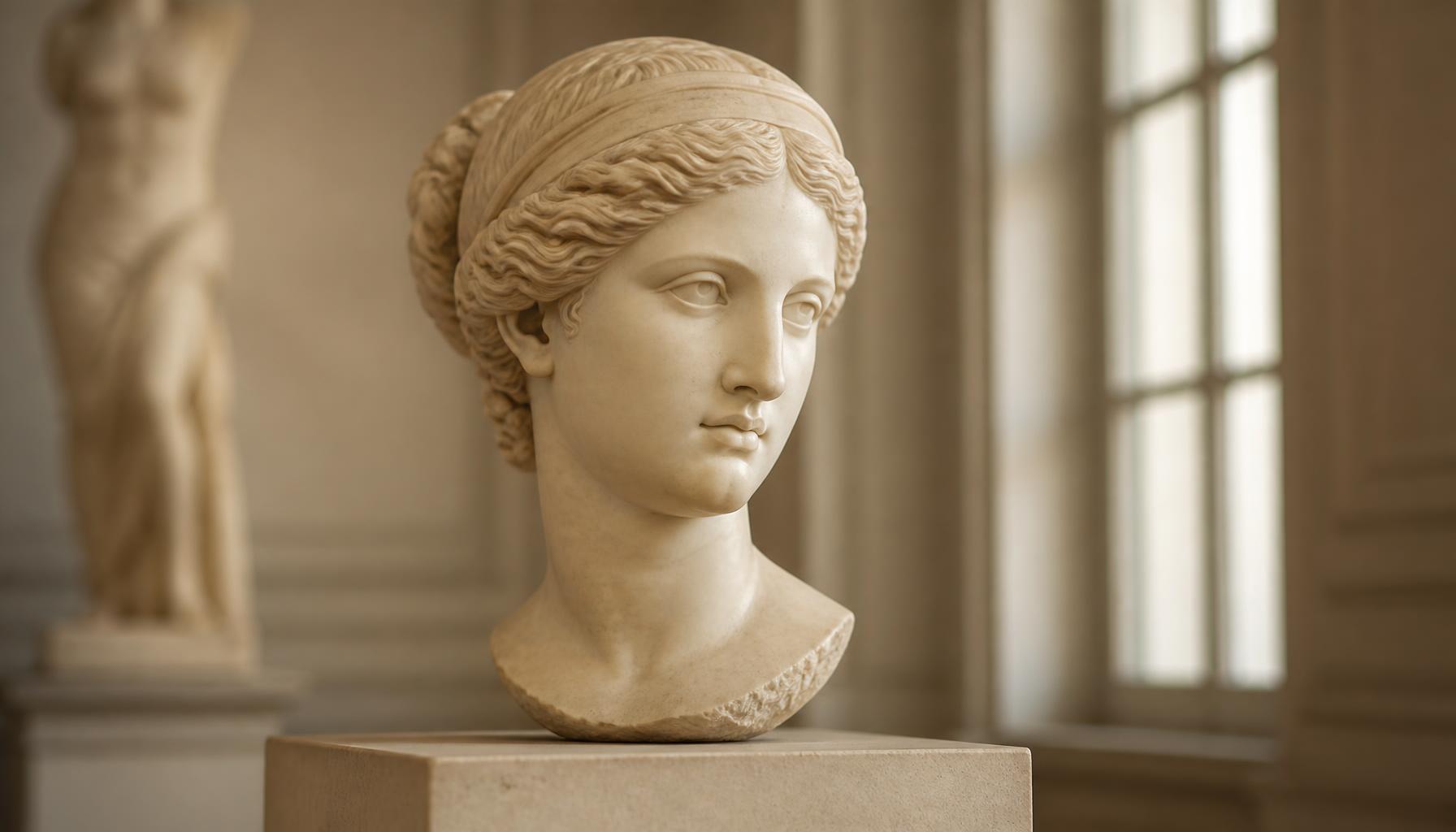
Aristotle claims that philosophy is born of wonder before what is not yet understood. Plato relates the Beautiful to the elevation of the soul; Dostoevsky claims that beauty will save the world. Perhaps there is a hypothesis here: beauty is not an ornament subsequent to knowledge, but the psychological condition that makes knowledge possible.
This hypothesis finds an echo in contemporary neuroscience. A predictive brain does not simply perceive objects; it continuously seeks to regulate the error between expectation and reality. To perceive is to stabilise patterns. To know is to reduce uncertainty. In this sense, the experience of the beautiful may correspond to a singular moment in which the organism recognises an order whose coherence exceeds its immediate capacity for explanation. The beautiful organises mystery.
And here it is necessary to introduce a distinction we almost never make, although everything that follows depends upon it. If the beautiful is the sign that there is an order to be deciphered, then that sign may be authentic or it may be forged. The problem is that, at the level of immediate response, the two signals trigger the same recognition. Propaganda, totalitarianism, personality cults, advertising and lies can be aesthetically impeccable. They work precisely because they offer the brain an experience of order, clarity and closure. That is why beauty is as dangerous and seductive as it is revelatory. A mature civilisation learns to interrogate what fascinates it.
It is precisely here that the feminine acquires a far deeper dimension than contemporary culture usually admits. We have reduced the feminine to identity, behaviour or bodily aesthetics. Perhaps we have forgotten its civilisational function. In practically all great traditions, the feminine appears less as a symbol of seduction and more as a principle of mediation between nature and culture, between birth and language, between the chaos of existence and the possibility of a life. Taken in this register, the feminine does not only produce life; it produces habitability — it preserves existence and renders it intelligible.
When Jung writes that a woman of extreme beauty may become a source of terror, this sentence admits an even more radical reading. The terror is not born of physical beauty. It is born of the fact that true beauty places us before an order for which we are not yet prepared. It is the structure of the numinous: that which simultaneously attracts and terrifies because it exceeds the frame of the subject who contemplates it. The beautiful demands conversion before offering comfort — and it is precisely this demand that forged beauty suppresses. False beauty inflates the ego; true beauty increases reality. One releases those who see it from any transformation; the other makes transformation inevitable.
The ancient myths seem to have understood that beauty is not mere appearance, but a force that attracts, disorganises and reorganises life. Where Aphrodite appears, no identity remains completely closed in upon itself. Desire reorganises values, displaces loyalties, dissolves boundaries and creates new bonds. Her union with Ares suggests that love and conflict are not absolute opposites, for from them may be born both fear and terror as well as Harmonia. In this sense, true harmony does not eliminate tensions, but finds a form capable of containing them without falsifying them. Authentic beauty does the same: it does not erase chaos in order to produce an artificial order, but transforms contradiction into intelligibility. The feminine, understood mythically, would be precisely this principle of mediation that receives heterogeneous forces, preserves life and converts them into a habitable form.
Perhaps that is why societies in decline tend to lose the sense of beauty first and only afterwards the sense of truth. Aesthetic degradation announces a growing inability to recognise order where there once was meaning. And the mechanism of this loss can now be named: a society does not abandon beauty all at once. It first grows accustomed to forged beauty — to imposed coherence, to a sublime that dispenses with thought — and in doing so loses the very organ by which it would recognise true coherence. When this discernment atrophies, the perception of truth soon follows, because truth and beauty have always been, at bottom, two modalities of the same recognition of order. The aesthetic criterion is lost and, with it, the epistemic criterion. A civilisation begins to die when it can no longer distinguish the sublime from mere stimulus.
Readings and comments
A space for resonance. Leave your reading, your disagreement, or what this text opened in you.
Be the first to comment on this essay.